Cultural Showcase
Delve into the rich tapestry of Macau's wood carving heritage, from its storied past to the master artisans who keep the tradition alive.
Macao, a hub of cultural exchange between China and the West, boasts a rich and diverse array of intangible and tangible cultural heritage. The Government of the Macao Special Administrative Region places great emphasis on the protection, organization, and exploration of cultural heritage, and has put in considerable effort in this regard. On June 14, 2008, the third Cultural Heritage Day in China, the State Council announced the second batch of national-level intangible cultural heritage listings, totaling 510 items, of which 147 were additions to the initial batch. Macao's woodcarved statues, as a category of fine art carving, was officially included in the national-level intangible cultural heritage list, marking Macao's first independent successful application for a national-level intangible cultural heritage item.
Origin
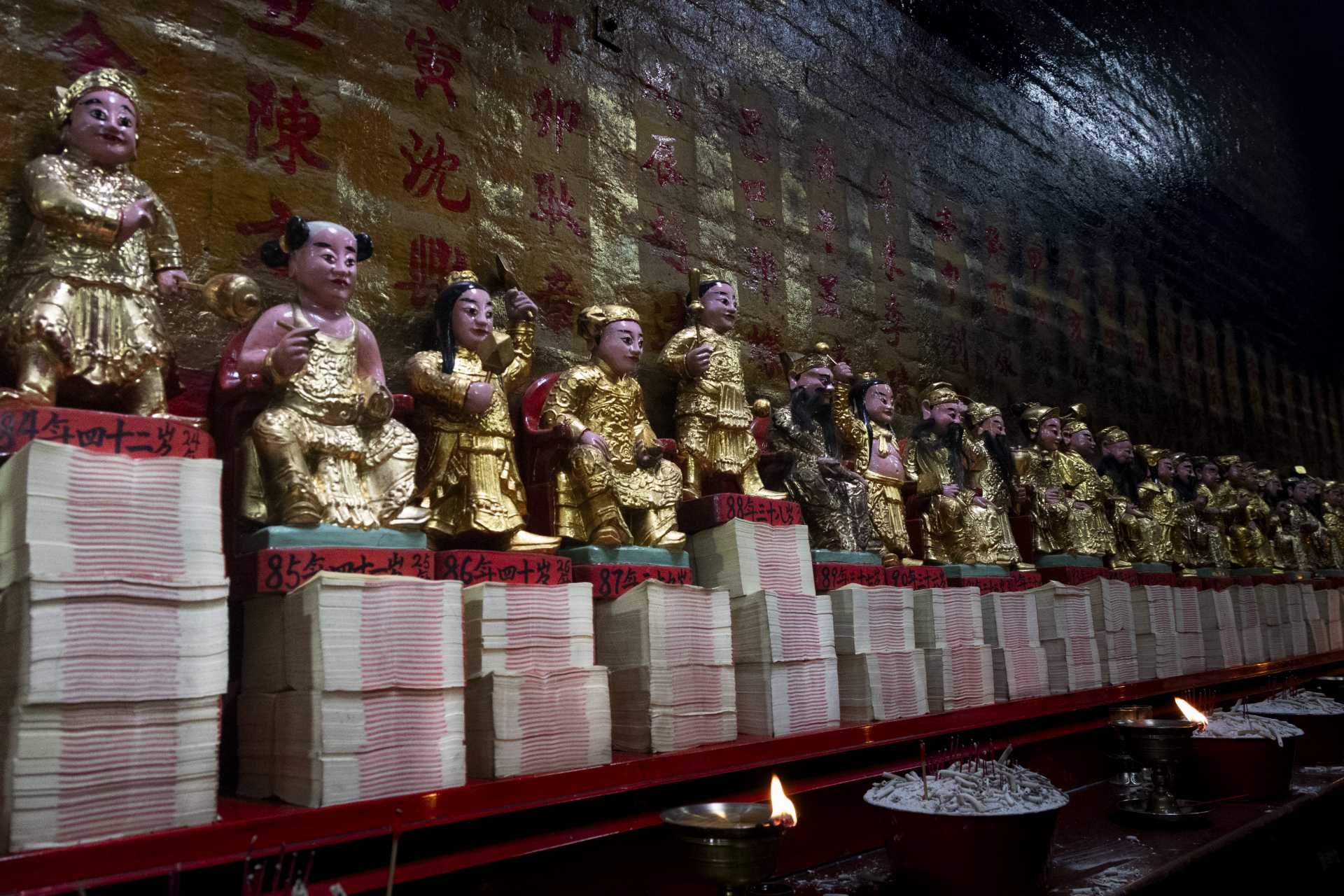
Macao boasts a profound cultural heritage, and numerous cultural relics have emerged from the land, among which are the woodcarved statues, originating from folk religious beliefs. Fishermen's woodcarved statues became a significant aspect of Macao's cultural landscape. In the early days, Macao was mainly a small fishing village, and fishermen who went out to sea year-round inevitably encountered strong winds and rough seas. Consequently, every household would place statues of ancestors or deities at the bow of their boats or in their homes for worship, to pray for the deities' blessings. In the early days, fishermen had limited financial means, their boats served as their homes away from home. Therefore, they would place very small, exquisite woodcarved statues in their boats, which led to the flourishing of the woodcarving industry. The consumers of Macao's woodcarved statues were primarily fishermen and religious believers. The heyday of fishermen, with one-third of Macao's total population being fishermen at that time, led to a high demand for woodcarved statues. Coupled with fishermen from neighboring regions, mainland merchants, and even some craftsmen from Southeast Asia accepting Macao's woodcarved statues in Macao, the industry saw rapid development and growth, with the craftsmanship improving, and the size of statue shops, known as 'divine shops,' mostly concentrated on Guanye Street, which had become an established industry with a significant scale. However, due to the war and the resulting business downturn in the late 1930s and early 1940s, many divine shops closed down. By the end of the 1950s, as Macao's economy shifted towards industrialization and the number of fishermen decreased significantly, the business of divine shops became even more sluggish. By the 1970s and 1980s, there were few statue shops left.
Development History
Macao's statue sculpting has evolved from simple small-scale woodcarving in earlier times to today's new large-scale Buddha statues, undergoing empowerment, optimizations, and renovations in different periods. It still retains the essence of ancient craftsmanship, such as ancient auspicious art, gold-leaf craftsmanship, and traditional Buddhist statue designs. At that time, wood was mainly used, with processes like whole cutting and joint carving, flame and acid etching for texture, production techniques, and painting skills were also introduced. This not only produced single wooden statues based on large-scale production wooden Buddha statues of international standard, but also enabled the creation of the history of wooden Buddha statues.
Craftsmanship
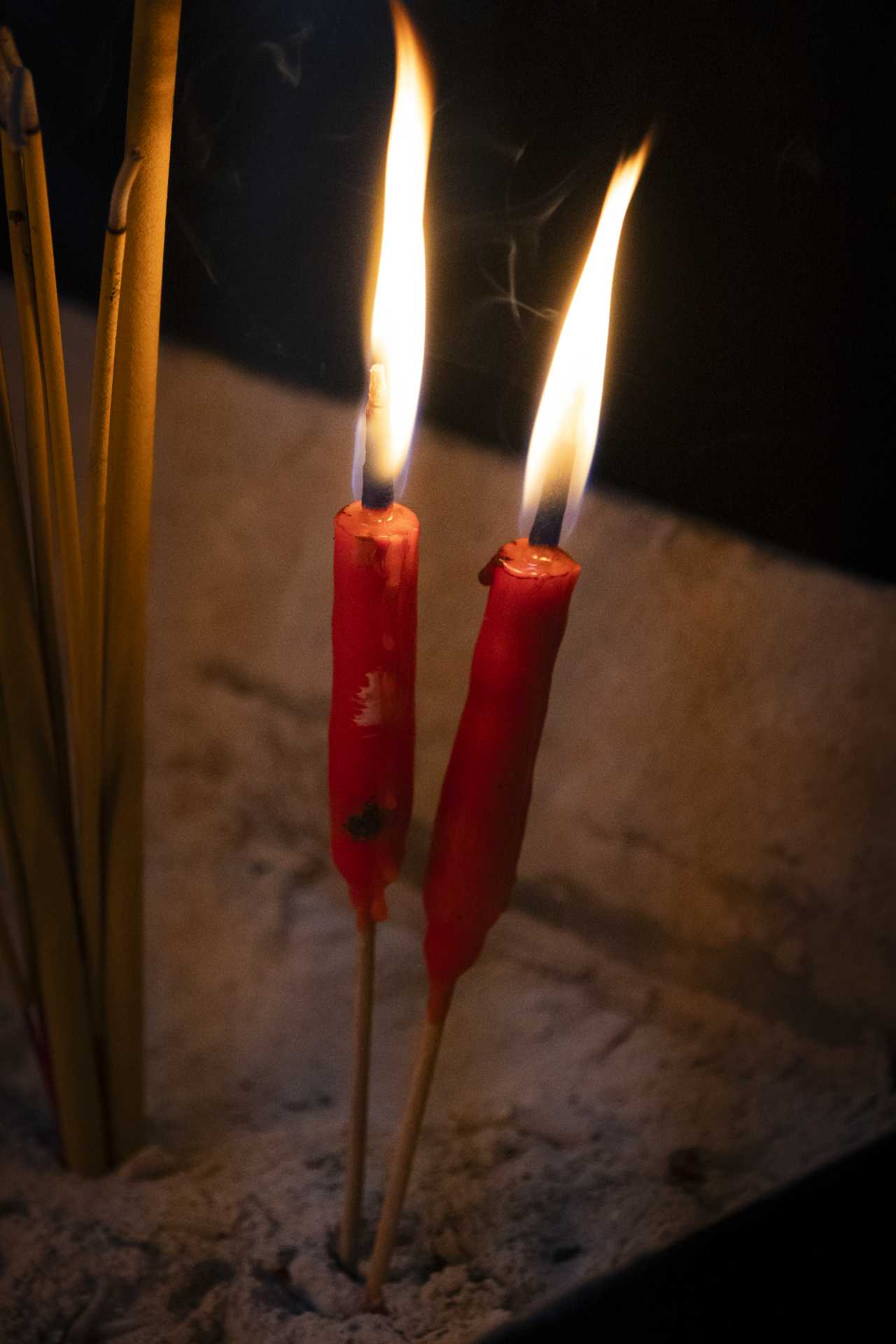
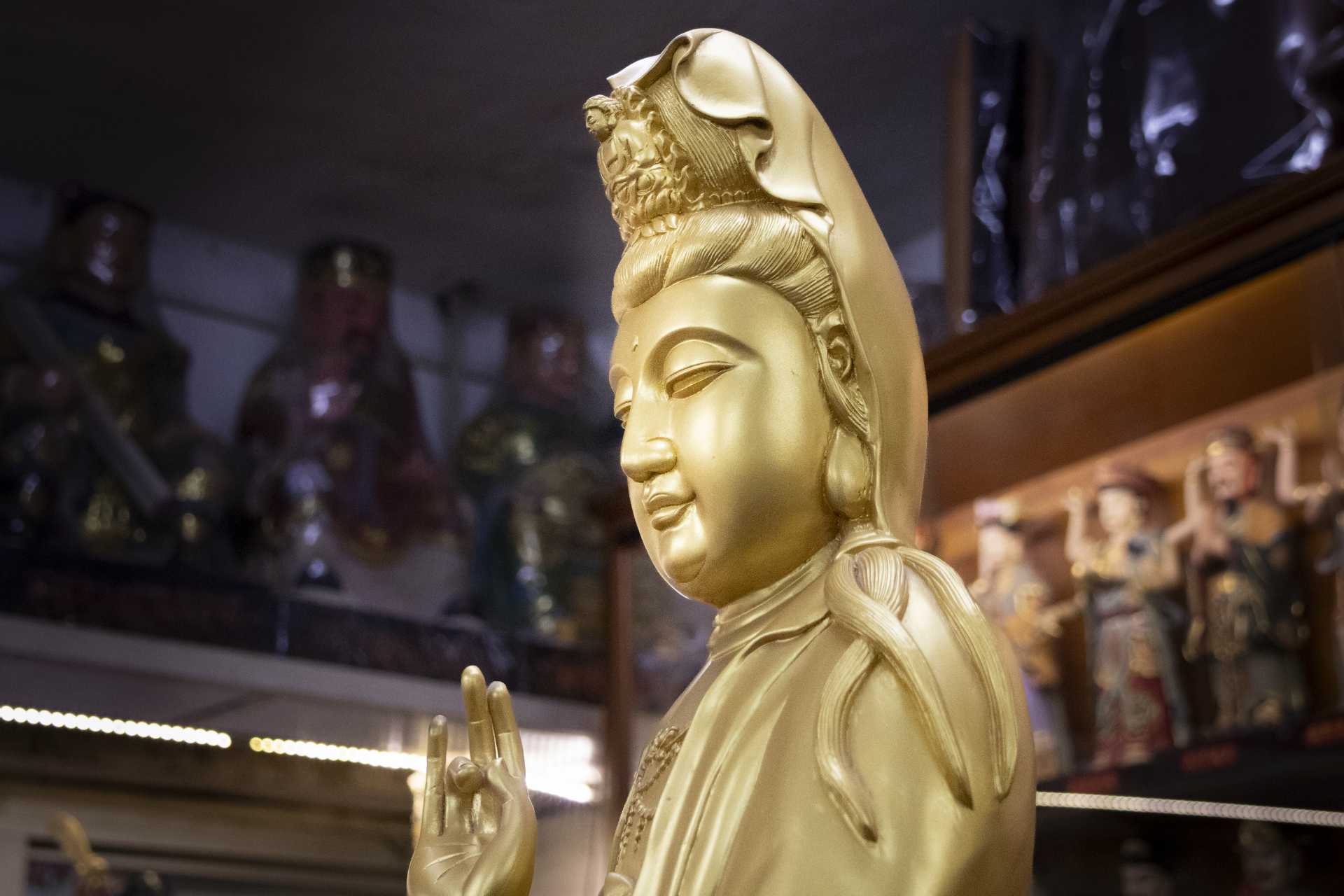
Woodcarving statues is an industry that demands high craftsmanship and technical expertise. Its production process involves sculpting design, typically opting for a round and elegant head and face shape, with three equal divisions, eyes that look lively and smile downwards, a large and straight nose, and a slightly smiling mouth. In terms of material selection, based on customer requirements, camphor wood and teak are commonly used. These woods have good anti-moth properties. Some precious woods are rarely used due to their high prices. The production process of statues is relatively complex, involving various steps such as sculpting, assembling, polishing, applying putty, sticking linen, applying primer, creating lacquer lines, sticking gold foil, and painting. Each step requires high technical proficiency. Among them, sculpting the base, polishing and creating the base, sticking gold foil, and painting are the four major important processes. The first step in embryo making is selecting wood. There are two craft methods: jointing and solid wood carving. Generally, a whole piece of wood is chosen for production, but for special needs, the Ningbo jointing method may also be employed. The advantage of the jointing method is that it allows for long-term preservation, but the production process is complex, time-consuming, wasteful of wood, and costly. Embryo making is the first process in the production of statues, including rough embryo and finishing. The main tools are axes, chisels, and mallets. Based on the proportions of each part, a rough outline is carved out, known as the rough embryo, commonly referred to as "removing the rough wood". Then, a fine knife and chisel are used for fine finishing, commonly known as "finishing", to make the overall outline of the statue more refined. The blade of the slot knife is curved, and knives with different curvatures are used to carve the concave and convex parts of the statue. Nowadays, in addition to handmade knives, electric woodworking tools are also used in the production of large statues. The process of polishing and priming refers to the steps of sanding the wooden base of the statue, applying a gray primer, sticking linen cloth, then painting and sanding again. This is also the process of making lacquer lines. The raw materials for the lacquer primer are sourced from brick kilns and mixed with raw lacquer in proportion after processing. Raw lacquer is the sap of natural lacquer trees, which can make the surface of the Buddha statue hard and wear-resistant, making it easier to sand. Before painting, rough sandpaper and fine sandpaper are used to sand and smooth the surface, and the joints where the wood meets are filled with lacquer primer. The joints are then pasted with linen cloth. After the first layer of coarse primer dries, sandpaper is used to remove any protruding spines. The painting and sanding process is repeated until the lacquer primer is completely smooth and shiny. In order to make the color and gold foil application more perfect, it is necessary to do a good job of polishing and priming. Gold foil is a traditional craft in China with a history of hundreds of years. Applying gold foil involves sticking it onto the surface of a finished statue to make it appear magnificent and more spiritual. First, a layer of adhesive gold lacquer is applied, then it is left to dry. Next, a gold foil is pressed onto the surface of the statue using an oil pen, ensuring it adheres fully to the underlying gold lacquer. After the surface dries, a soft brush is used to reinforce it overall. After a week or two for the primer and gold foil to dry thoroughly, a layer of transparent lacquer is applied to the surface of the statue for protection. The final process is to color the statue, which is a conventional technique to make the statue vibrant. The final painting of the statue highlights its contours, completing the entire production process.
Cultural Connotation
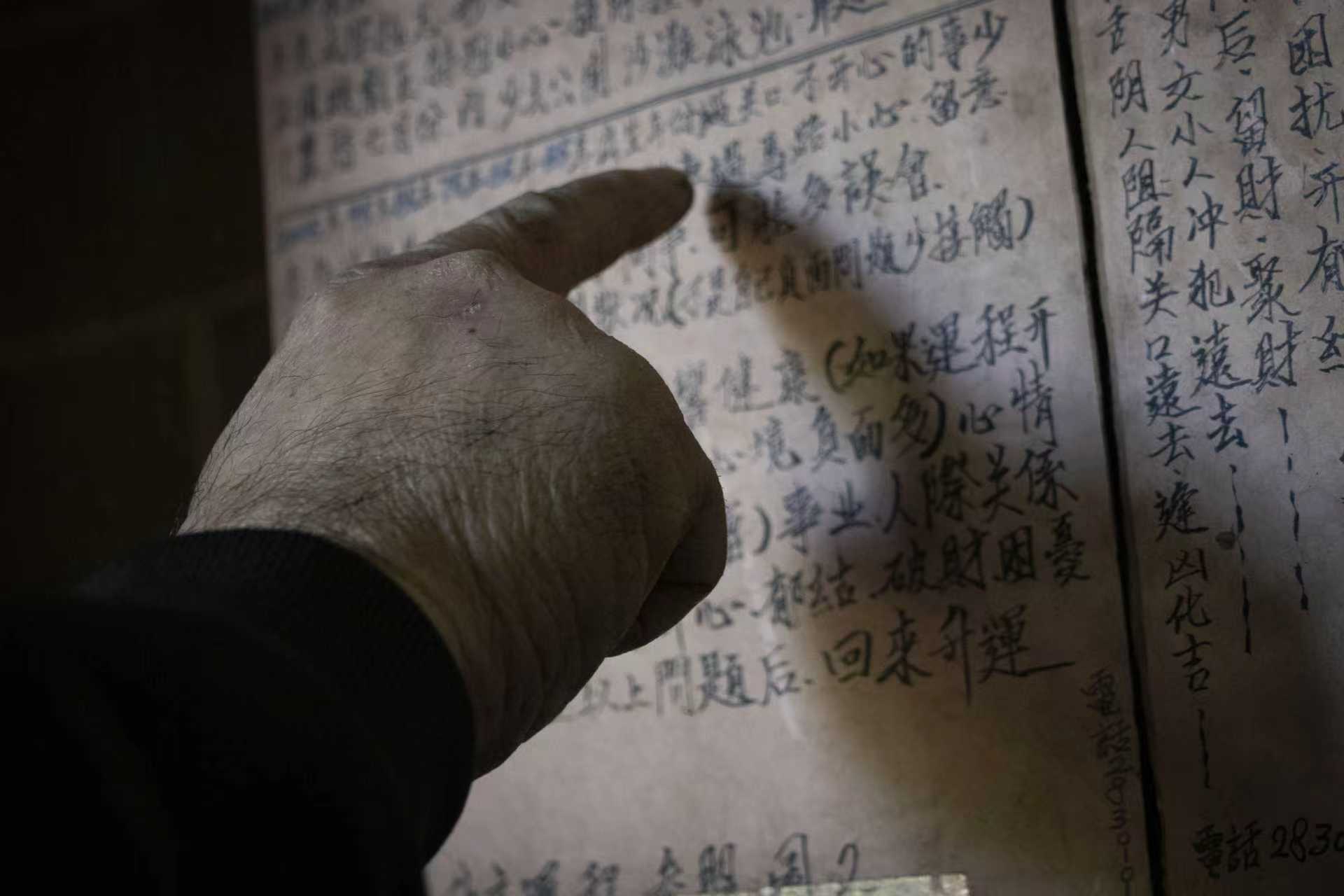
The art integrates Chinese and Western cultures, employing techniques such as round carving, relief carving, and shallow engraving, complemented by intricate decoration, gold foil, and coloring, resulting in works that are both exquisite and grand, yet retain the charm of woodcarving. The themes primarily revolve around deities, Buddhas, and ancestors, and are finely detailed, featuring elements such as vivid hair, silk robes, and drapery, and reflecting the auspicious folk color concept of 'seeing red and seeing gold'. The statues in Macao are an embodiment of the essence of craftsmanship from various regions, excelling in both realistic and imaginative techniques. The decorative styles of different statues vary, such as the smooth lines of Mazu's clothing and the vivid nine-dragon patterns; the serene countenance of Amitabha Buddha, which is in the style of the Tang Dynasty; and the statues of Sam Po God, adorned with clothes and headgear donated by believers, reflecting the fusion of faith and folk customs.